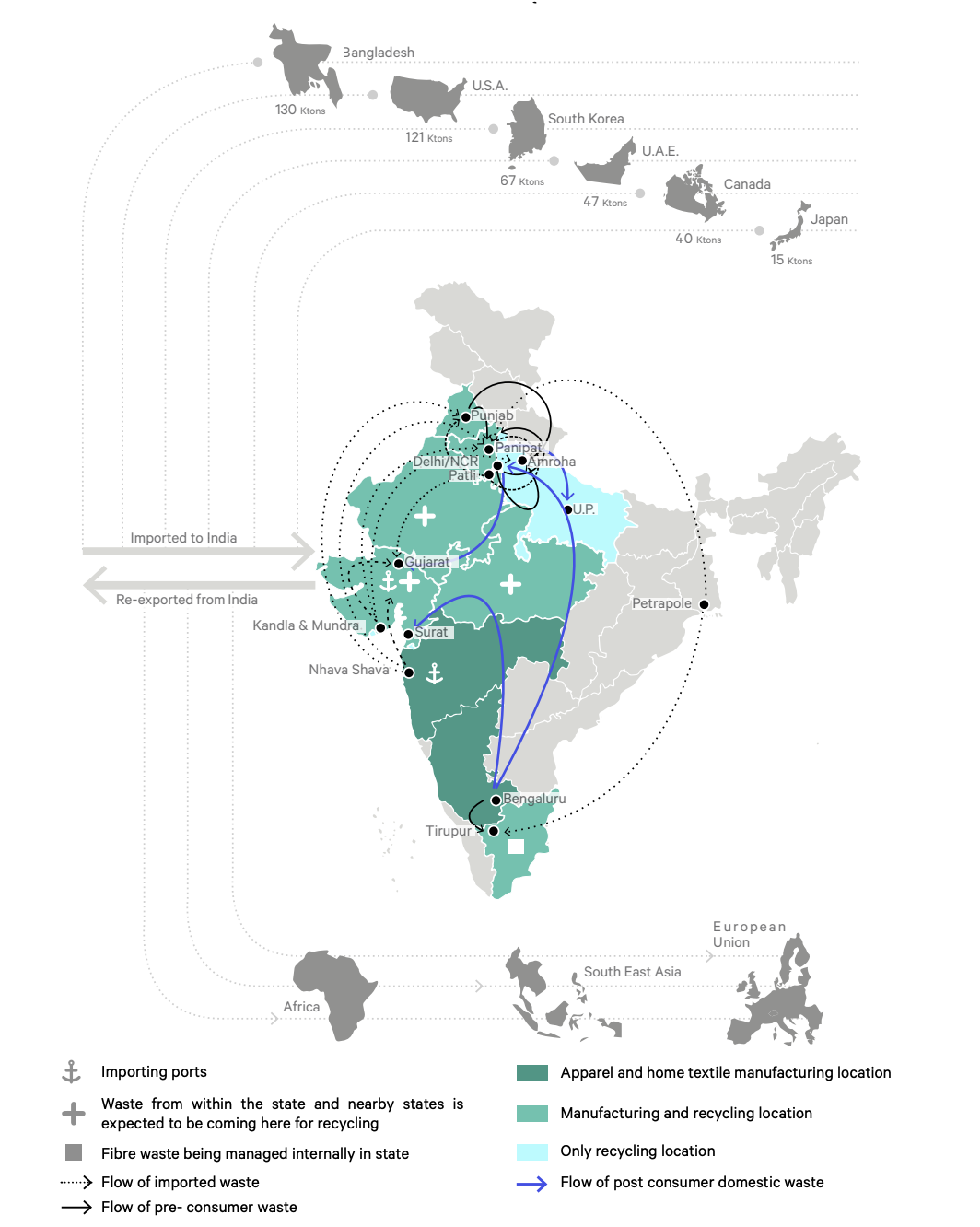
India is home to one of the world's largest and most complex textile industries. With over 45 million workers employed across spinning, weaving, dyeing, and garment manufacturing, the sector generates an estimated 7.8 million tonnes of textile waste annually. The majority of this waste — including high-quality pre-consumer cutting waste from garment factories — is currently underutilised, downgraded, or discarded.
The "Wealth in Waste" report, produced in partnership with leading industry stakeholders, maps the volume, composition, and potential value of India's post-production textile waste streams. The findings are striking: approximately 2.1 million tonnes of pre-consumer garment-manufacturing waste is generated each year in India's garment clusters, of which an estimated 60–70% could be mechanically recycled into reusable fibre inputs with relatively modest infrastructure investment.
The economic case for integration is compelling. At current prices for recycled cotton yarn, India's sortable post-production waste stream represents a potential market value of over USD 1.2 billion annually. Yet today, less than 15% of this material is captured and processed into apparel-grade recycled content. The remainder is either exported as rag-grade waste, used for industrial wiping cloths, or landfilled.
The report identifies several structural barriers to scale: fragmented collection networks, lack of standardised waste sorting protocols, absence of digital traceability systems, and limited awareness among factory managers of the commercial value of their production offcuts. Overcoming these barriers requires coordinated investment from brands, recyclers, and enabling platform providers.
Policy support is also critical. The report recommends phased Extended Producer Responsibility targets for India's apparel sector, paired with incentives for factories that invest in digital waste documentation and sortable collection systems. With the right enablers in place, India has the potential to become the world's largest source of traceable, recycled apparel-grade textile inputs within a decade.